
Have you looked at the Winter Reliability Assessment by the North American Electric Reliability Corporation?
Likely not.
"This WRA covers the upcoming three-month (December–February) winter period, providing an evaluation of the generation resource and transmission system adequacy necessary to meet projected winter peak demands and operating reserves. This assessment identifies potential reliability issues of interest and regional risks. The following findings are the ERO Enterprise’s independent evaluation of electricity generation and transmission capacity as well as the potential operational concerns that may need to be addressed for the upcoming winter," the report states.
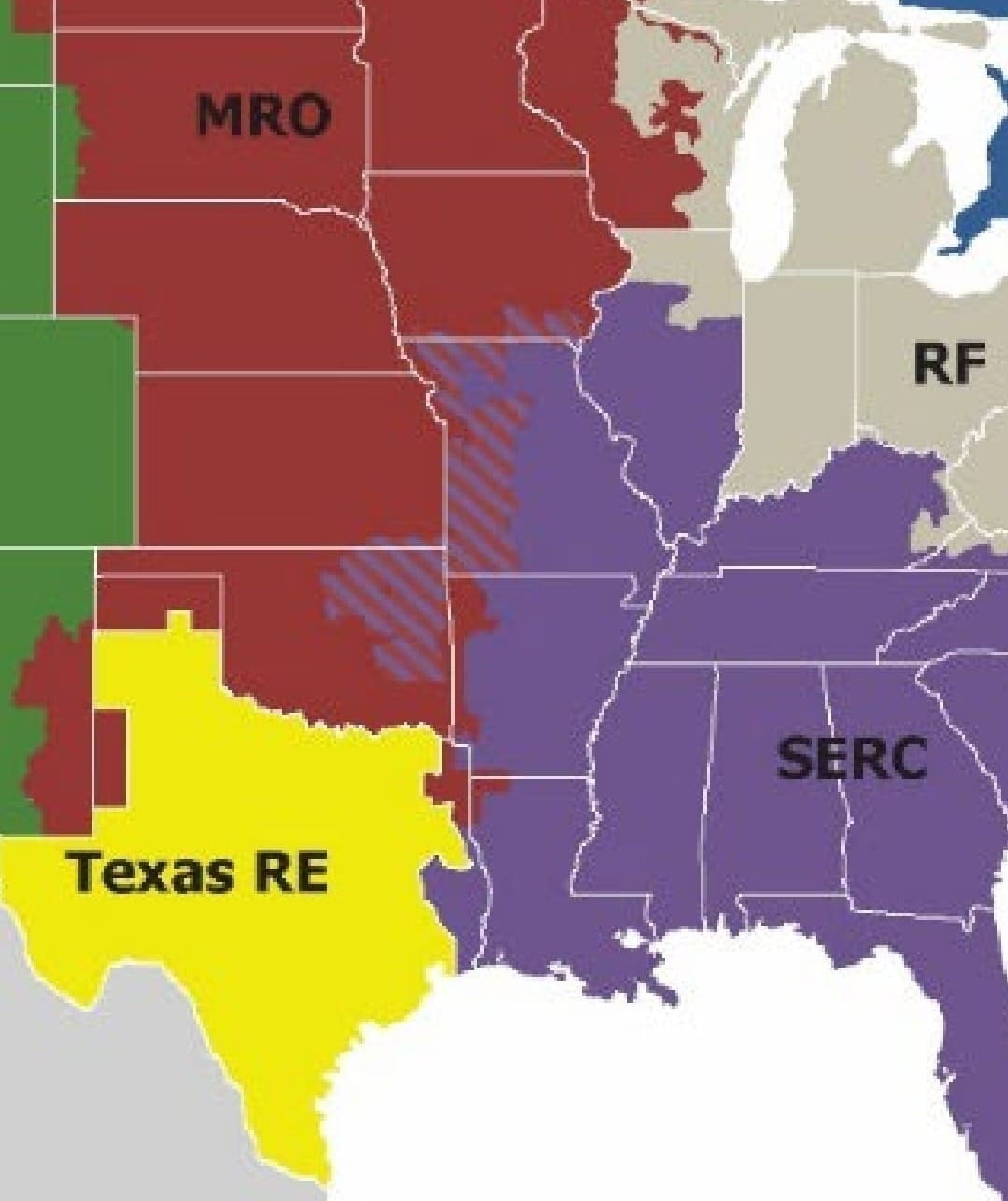
"North American BPS is made up of six Regional Entities as shown in the map and corresponding table below. The multicolored area denotes overlap as some load-serving entities participate in one Regional Entity while associated Transmission Owners/Operators participate in another."
Most of Arkansas is in the SERC Reliability Corporation except for a small sliver of Northwestern, Western and Southwestern Arkansas that is in the Midwest Reliability Organization.
In the complicated report that analyzes electricity, natural gas and other energy sources, it notes: "BPS resources are growing, but at a slower rate than demand is rising. Battery and solar facilities were
the leading resource types added to the BPS since last winter. Solar resources, however, often do not
supply output during hours of peak winter demand. Growth in demand response is also contributing
to BPS resources for the upcoming winter."
Another important aspect of the report in its "Risk Highlights" section states "Winter electricity demand is rising at the fastest rate in recent years, particularly in areas where data center development is occurring."
Why is this important now?
Arkansas is currently experiencing Winter Storm Fern as the entire state is covered in snow and ice with freezing temperatures.
The U.S. Department of Energy (DOE) issued an emergency order Sunday to mitigate blackouts in the Mid-Atlantic as Winter Storm Fern marches to the East Coast.
The release stated: "Issued pursuant to Section 202(c) of the Federal Power Act, the order authorizes PJM Interconnection, LLC (PJM) to run specified resources located within the PJM Region, regardless of limits established by environmental permits or state law. The order will help PJM with the extreme temperatures and storm destruction across the Mid-Atlantic and reduce costs for Americans during the winter storm.
“As Winter Storm Fern brings extreme cold and dangerous conditions to the Mid-Atlantic, maintaining affordable, reliable, and secure power in the PJM region is non-negotiable,” said U.S. Secretary of Energy Chris Wright. “The previous administration’s energy subtraction policies weakened the grid, leaving Americans more vulnerable during events like Winter Storm Fern. Thanks to President Trump’s leadership, we are reversing those failures and using every available tool to keep the lights on and Americans safe through this storm.”
On day one, President Trump declared a national energy emergency after the Biden administration’s energy subtraction agenda left behind a grid increasingly vulnerable to blackouts. According to the North American Electric Reliability Corporation (NERC), “Winter electricity demand is rising at the fastest rate in recent years,” while the premature forced closure of reliable generation such as coal and natural gas plants leaves American families vulnerable to power outages. The NERC 2025 – 2026 Winter Reliability Assessment further warns that areas across the continental United States have an elevated risk of blackouts during extreme weather conditions.
Power outages cost the American people $44 billion per year, according to data from DOE’s National Laboratories. This order will help mitigate power outages in the Mid-Atlantic and highlights the commonsense policies of the Trump Administration to ensure Americans have access to affordable, reliable and secure electricity."
The Texas Order, Data Centers
The U.S. Department of Energy (DOE) issued an emergency order Saturday "for the deployment of backup generation resources in order to mitigate blackouts in Texas during Winter Storm Fern."
The release continues: "Issued pursuant to Section 202(c) of the Federal Power Act, the order authorizes the Electric Reliability Council of Texas (ERCOT) to deploy backup generation resources at data centers and other major facilities."
Today’s action follows a letter Secretary Wright sent Thursday to grid operators asking them to be prepared to use backup generation if needed to mitigate the risk of blackouts during the storm. DOE estimates more than 35 GW of unused backup generation remains available nationwide. The order will help ERCOT with the extreme temperatures and storm destruction across Texas and reduce costs for Americans during the winter storm."
The release included the same language as Sunday's about the Trump administration's commitment "to keep Americans safe during Winter Storm Fern."
The Texas order is in effect until Jan. 27.
Texas Data Centers
According to the Visual Capitalist website, Texas ranks second behind Virginia in locations with data centers. Texas has 413; Virginia, 685.
The order Saturday from the Department of Energy appears directed primarily toward data centers to use backup emergency generators.
Data centers put extra pressure on an already-stressed grid. What happens when more data centers are built in all 50 states?