
The big question in Grant County: Do you support the proposed data center?
Several local political candidates have waivered with iffy answers and continue to straddle the line, wanting to hear more about data centers.
Not Justice of the Peace Scott Wells who is running for county judge. He is a hard no.
"I have already heard everything I've wanted to hear, the pros and cons," Wells said. "I don't think Grant County can handle it. I've read articles about environmental issues, data centers and water sources. We have water issues right now. What happens when the land is clear cut and someone drills a well? Out there anyone who can't hook up to county water has well water."
The proposed data center and solar farm would be built in the district where Wells, 58, has served as Justice of the Peace for 26 years.
Data centers and solar farms are the most critical topics in this year's Grant County elections. That's why a county judge's race becomes front and center in community.
According to a recent opinion by Arkansas Attorney General Tim Griffin, a county judge can enter into an Act 9 bond and/or PILOT agreement without an ordinance or resolution from the quorum court. A multi-million dollar – even a billion dollar – data center can get a much desired tax break simply from a county judge.
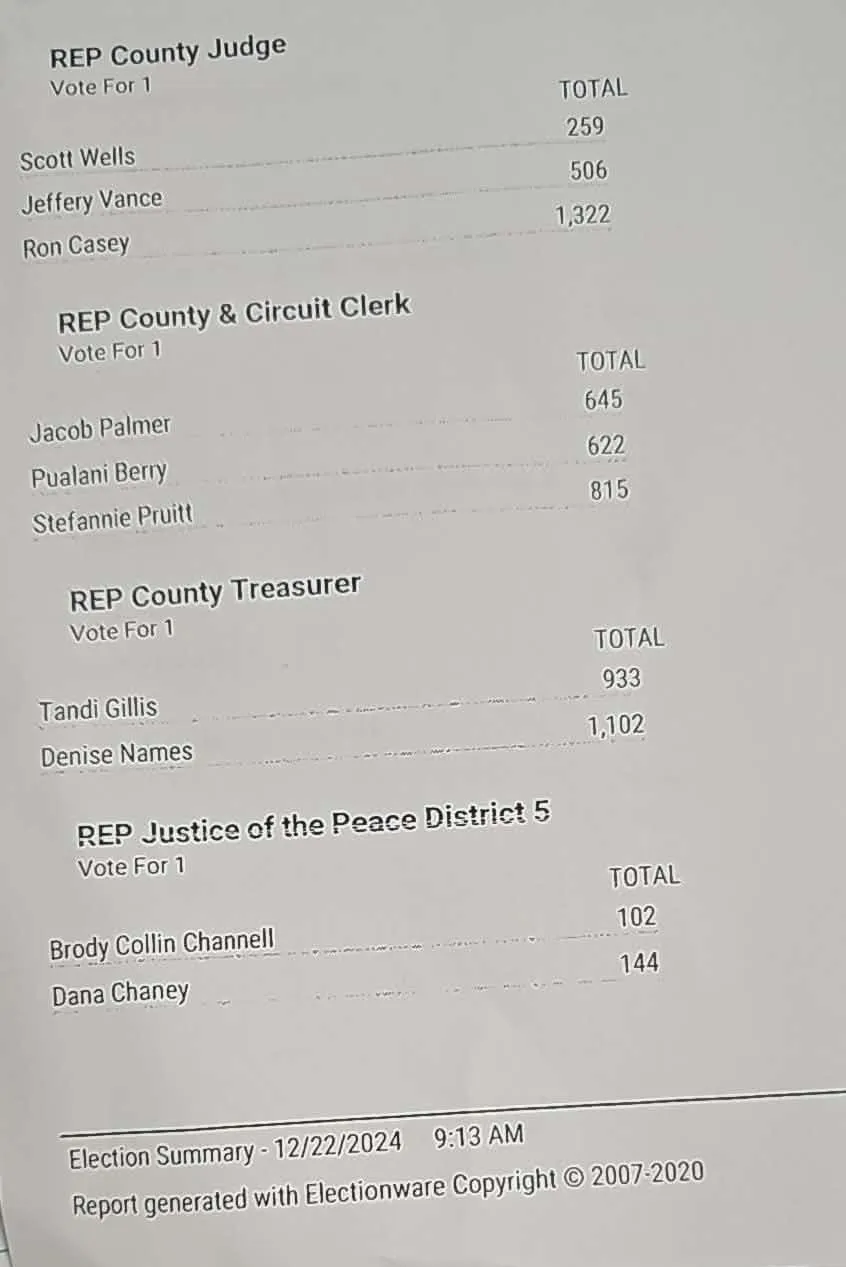
Wells is in a three-person race for county judge. The other two candidates, Ron Casey and Jeff Vance, have not publicly said whether they are for or against a data center.
The Data Center Drama
The data center idea was first brought to the Quorum Court's attention last summer when Clean Cloud Energy's representatives – Raj Keswani and Clark Bixler – spoke about a proposed 753-acre data center and 3,200-acre solar project.
Clean Cloud would facilitate the deal then sell the project to a big tech entity like such as Oracle, Meta, Google or Amazon.
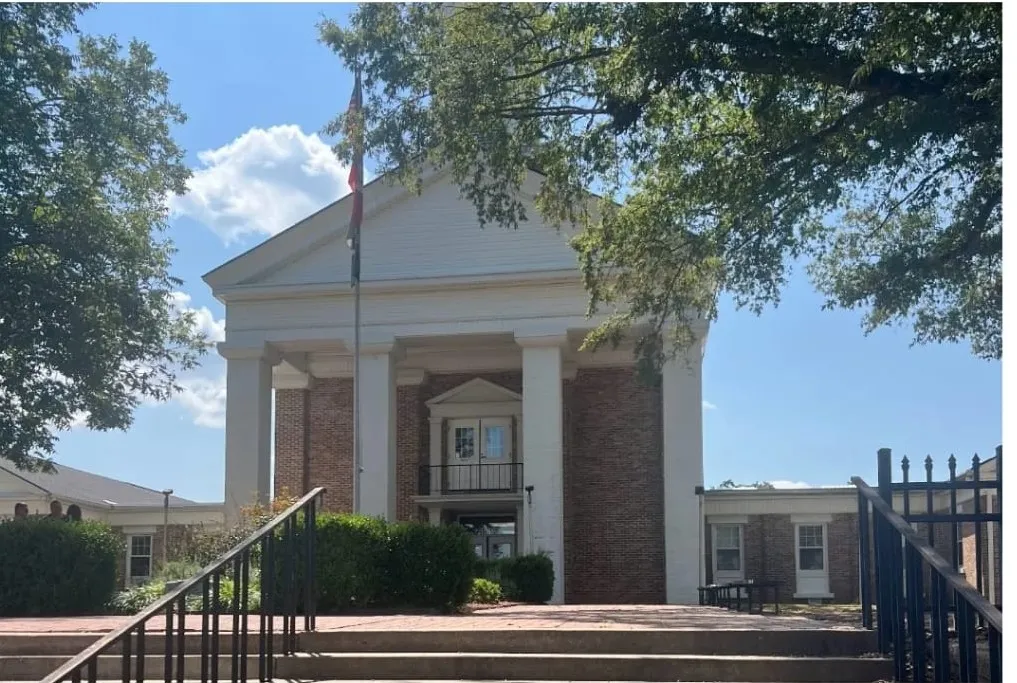
By the next meeting, on July 21, citizens packed the courthouse courtroom demanding answers about the project.
The opposition to the data center, solar farm and the 65% tax abatement – a tax discount through a payment-in-lieu-of-taxes (PILOT) agreement – has only grown over the months.
Rightly so, Wells said.
Wells comes from an agricultural background. He currently owns a small cattle farm and raises honey bees. Wells is also in hay production.
He is worried about the effects of a data center on the place he has always called home. Wells has studied the environmental impact of data centers, and the news isn't good. Take bees, for instance.
"Honeybees are a unique insect," Wells said. "They feel what we can't feel or see."
Wells said a data center and its noise could mess up the coordination of bees. Bees are necessary for crops and without them, many crops would not exist.
"If we didn't have bees, we wouldn't have food sources," Wells said.
According to a November 2025 article in Computer Weekly, the use of AI that powers data centers coukd kill millions of bees. The article states a study from Australia: "A new study from the Centre for AI, Trust and Governance at the University of Sydney provides a perspective that many people will be able to comprehend: the use of AI could lead to the death of millions of bees, putting at risk the A$4.6bn of Australian agricultural production that relies on honeybee pollination."
Wells has a vision for his county, which has tranformed from predominantly rural to more urban in recent years as numerous subdivisions have cropped up in places where pine trees once grew.
However, the county is still rural enough to have a major problem with animal dumping. Wells wants to find a solution to the ongoing dog-and-cat problem.
Wells also wants to focus on better-paying jobs tailored to Grant County citizens and not the ones connected to a data center.
"A data center offers jobs but not long-term ones," Wells said. "We have blue-collar workers. I'm a blue-collar guy. We have people who are working hard for their families. The data center jobs require higher degrees. A lot of these data centers hire people not from here. We need to take care of our people. The people of Grant County should come first."
As for giving a tax abatement to a data center, Wells says "no."
"Let them pay 100% and we'll manage it," Wells said.
Wells said everyone is focused on the money that a data center could bring into the county but are not looking at common sense questions.
"The fire department, do we have the experience to deal with a data center fire?" Wells said. "That's an electronic fire versus the fires we normally have. We have rural and city fire departments. I don't think we are adequately prepared."
This, too, is a fact.
According to the International Association of Fire Fighters, data center fires are currently a rare occurrence, but fire departments must pre-plan because such fires are complex.
A March 2025 article published on the International Association of Fire Fighters website states, "the massive buildings have complex floor plans, ultra-secure perimeters, and high-value equipment that reacts poorly to water — all while housing backup power systems that include dangerous lithium-ion batteries."
While Wells said the data center will have construction jobs for "some Grant County folks" for three or four years, it will not create jobs that offer workers long-term benefits like health insurance and retirement.
"I'm against people coming in and working here and taking away jobs of the people of Grant County," Wells said. "We may need them (data centers) for life but they don't offer jobs."
He cites manufacturing jobs and other tech jobs as possibilities.
As Wells travels throughout the county, he said he hears from more people who are against the data center than for it. Additionally, people are confused and have questions.
"People have a right to know what is going on," Wells said.
Before December's Quorum Court meeting, citizens protested the data center project outside the courthouse.
At the end of the Quorum Court meeting Wells asked County Judge Randy Pruitt if the county had heard from Clean Cloud Energy since the Quorum Court passed two resolutions last fall allowing the exploration of tax abatements.
Pruitt, who is not seeking re-election, said no.
Wells told the Reckoning if Clean Cloud wants to do business in Grant County the company needs to come to its meetings.
"Clean Cloud hasn't responded," he said. "Why haven't they responded? They need to come to meetings. This is our town. This ain't their town. Our way of life is our way not theirs."
Editor's note: In October the Grant County Quorum Court voted unanimously to approve two resolutions – one about the data center, one about the solar farm – to learn more about the Clean Cloud Energy project. Wells voted for those two resolutions. Neither contain a tax abatement.
To clarify readers' questions, the Reckoning asked Wells about his vote.
"At the time I was wanting more information and contacting other justices of the peace in other counties and seeing what they went through and went to other counties to visit there data center and it was not for Grant County," Wells said.