
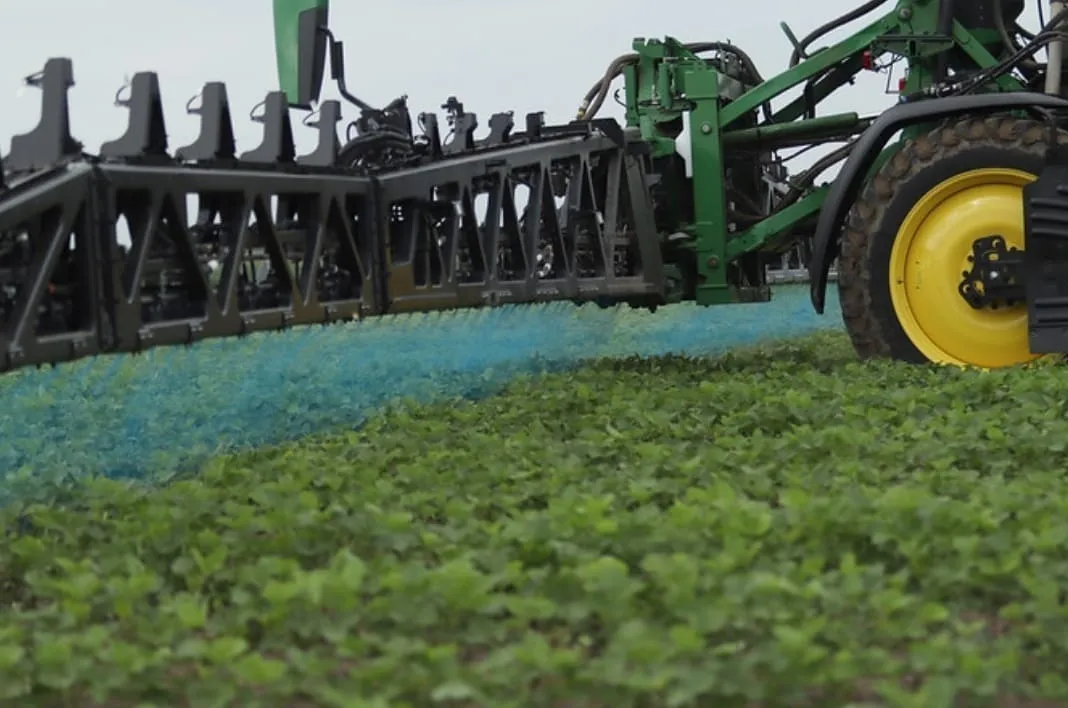
Chances are low, but not zero, that a lawsuit to vacate 2026 registrations allowing use of over-the-top dicamba products in cotton and soybeans might keep farmers from using the herbicide, said Brigit Rollins, staff attorney for the National Agricultural Law Center.
Meanwhile, another high-profile herbicide — glyphosate — has been the subject of a presidential executive order and upcoming action at the U.S. Supreme Court.
The Environmental Protection Agency issued new labels for dicamba products on Feb. 6. Two weeks later, the National Family Farm Coalition, Center for Food Safety and Center for Biological Diversity, and the Pesticide Action and Agroecology Network filed suit in the 9th Circuit Court of Appeals based in San Francisco.
In addition to setting aside the dicamba registrations, the coalition is asking the court to declare that EPA violated the Endangered Species Act as well as the Federal Insecticide, Fungicide and Rodenticide Act, known as FIFRA, the law that governs registration, distribution, sale and use of pesticides.
“The plaintiff's opening brief isn't due until May 11, and EPA's response brief is due June 10,” Rollins said. “Unless this case is expedited in the relatively near future, I doubt that we'll see a ruling vacating the labels during the growing season, especially with the new temperature cutoff dates.
“But you never know,” she said. “Stranger things have happened.”
Glyphosate
The White House issued an executive order on Feb. 18 that invokes the Defense Production Act directing the U.S. Department of Agriculture saying “to take steps to boost production of phosphorus and glyphosate and work with Secretary of War Hegseth to establish an order of priorities and to ensure that domestic phosphorus and glyphosate production does not face undue regulation.”
The presidential order said, “ensuring robust domestic elemental phosphorus mining and United States-based production of glyphosate-based herbicides is central to American economic and national security.” The White House noted the importance of phosphorus to semiconductor manufacturing, radar, solar cells and sensors. Phosphorus also is a component of glyphosate manufacturing.
However, it’s not yet clear how the objectives of the executive order will be accomplished, Rollins said. The outcome of the Supreme Court ruling in one case may affect production of Roundup, a glyphosate herbicide.
Bayer, the chemical manufacturer that owns Roundup originator Monsanto, has agreed to a proposed $7.25 billion settlement to resolve thousands of active lawsuits alleging that the company failed to warn consumers that the popular herbicide Roundup could cause cancer.
“If approved by the court, the settlement would resolve not only current lawsuits, but also future claims through a long-term program that would pay out claims over the course of 21 years,” Rollins said.
A March 4 order from the Circuit Court of the City of St. Louis granted preliminary approval of the settlement.
The settlement comes as the U.S. Supreme Court is scheduled to take up Durnell v. Monsanto on April 27. Durnell claims Monsanto-owned Bayer failed to warn him of the potential health risks of using Roundup.
“If the high court rules in favor of Bayer and finds that FIFRA preempts state law on the duty to warn consumers about potential health risks, I could see the settlement helping resolve ongoing litigation more quickly,” Rollins said. “If the court rules against Bayer, it’s possible the settlement could have less impact if a significant number of plaintiffs choose to continue pursuing litigation against Bayer.
“What we can say for sure is that Bayer said it ‘could consider winding down its glyphosate production if it continues to face mounting litigation and steep jury verdicts,” she said.
Rollins will discuss Durnell v. Monsanto in detail during the May 20 webinar, “Failure to Warn: A Look at Recent State and Federal Action on Pesticide Labeling.” Registration is available online.
Warning labels
Kentucky’s legislature also took on the issue of pesticide labeling, introducing SB 199, which would amend Kentucky law so that a federally registered pesticide label would be considered a “sufficient warning” for any state law concerning the duty to warn consumers about potential health risks from the herbicide.
Kentucky is the latest state to introduce such legislation, with at least six states introducing similar bills so far in 2026: Florida, Kansas, Missouri, Tennessee and Wyoming.
For more information, to view NALC article “2026 Update on State Pesticide Liability Limitation Bills.”
About the National Agricultural Law Center
Created by Congress in 1987, the National Agricultural Law Center serves as the nation’s leading source of agricultural and food law research and information. The NALC works with producers, agribusinesses, state and federal policymakers, lenders, Congressional staffers, attorneys, land grant universities, students, and many others to provide objective, nonpartisan agricultural and food law research and information to the nation’s agricultural community.
The NALC is a unit of the University of Arkansas System Division of Agriculture and works in close partnership with the National Agricultural Library, a subsidiary of the USDA’s Agricultural Research Service.
For information about the NALC, visit nationalaglawcenter.org. The NALC is also on X, Facebook and LinkedIn as @nataglaw. Subscribe online to receive NALC Communications, including webinar announcements, the NALC’s Quarterly Newsletter, and The Feed.
About the Division of Agriculture
The University of Arkansas System Division of Agriculture’s mission is to strengthen agriculture, communities, and families by connecting trusted research to the adoption of best practices. Through the Agricultural Experiment Station and the Cooperative Extension Service, the Division of Agriculture conducts research and extension work within the nation’s historic land-grant education system.
The Division of Agriculture is one of 20 entities within the University of Arkansas System. It has offices in all 75 counties in Arkansas and faculty on three campuses.
Pursuant to 7 CFR § 15.3, the University of Arkansas System Division of Agriculture offers all its Extension and Research programs and services (including employment) without regard to race, color, sex, national origin, religion, age, disability, marital or veteran status, genetic information, sexual preference, pregnancy or any other legally protected status, and is an equal opportunity institution.